
Sunday Homily, 28 December 2025 - Fr Paul Rowse, OP
Updated: Dec 29, 2025
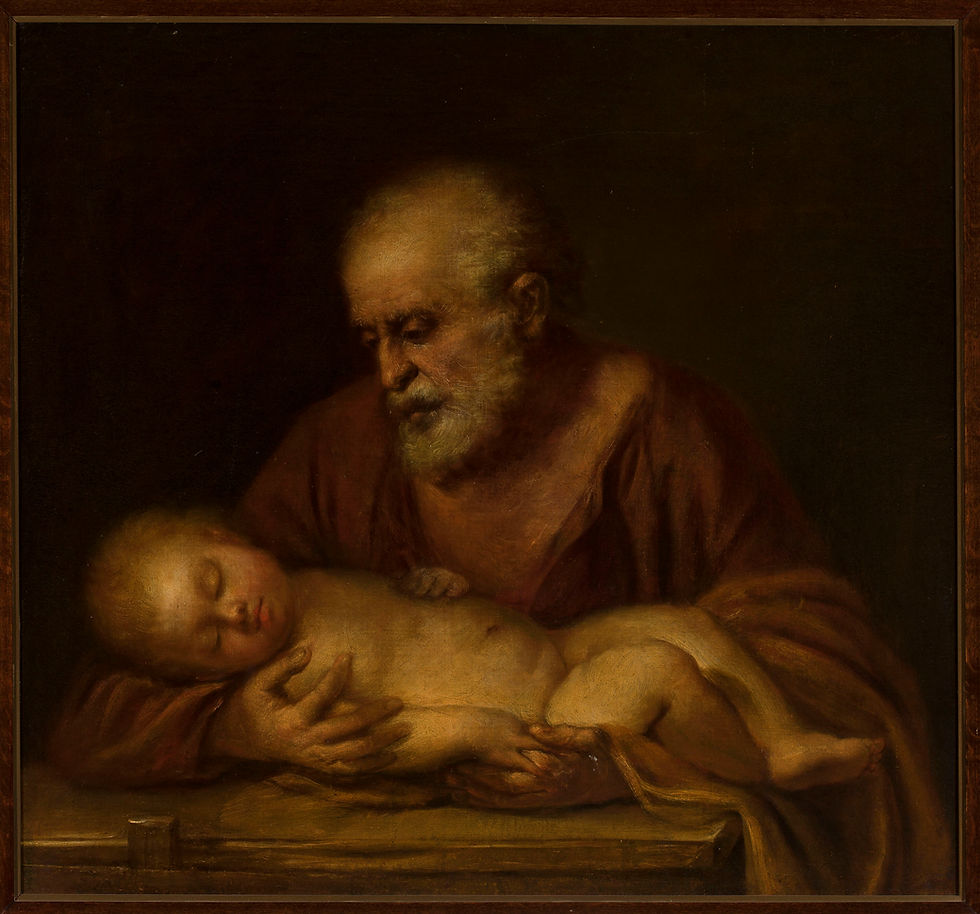
Of the four dreams that St Joseph had during Jesus’ infancy, three of them are about Herod's family. We know about the first of these, the dream in which Joseph is encouraged to take his pregnant betrothed as his wife. In the face of a face-saving divorce, God intervenes to give Jesus an adoptive, earthly father in Joseph. The other three dreams are about Herod the Great or his son Herod Archelaus. And so, we are given to compare Herod's family with Joseph's.
Herod the Great could well have had a dozen sons, many of whom were called Herod. Although he killed off this or that one in fits of power-driven paranoia, by the end of his life he seems to have favoured three younger ones: Herod Archelaus, Herod Antipas, and Herod Philip II. It’s these three who are the main beneficiaries of his last will. But they fought over the estate, so much so that Herod Antipas contested his father’s will before the Roman Emperor. Caesar decided that the three boys would each receive a portion of their father's former domain, together with their aunt, Salome: thus, the boys were known as “tetrarchs”, rulers of a quarter. Thus, in just one generation, Herod’s ethnarchy goes from an aspiring client-kingdom over all the places where Jews live and might visit to but four allotments, each with their own petty despot. We meet all three of them in the New Testament: Archelaus is here during the Lord’s infancy, Antipas is there in Holy Week, and Philip’s marriage is the subject of John the Baptist’s preaching.
Unfortunately, Herod Archelaus was a chip off the old block. Although historians will affirm his deference to Rome and his reticence to start ruling before receiving the imperial sanction, Archelaus wasted no time in showing himself as king to the people. He gave great feasts and splurged from the moment he succeeded his father. Thus, for the nine or ten years that he ruled Judaea, Archelaus was every bit as grandiose as his father had been before him.
One particular event stands out for Archelaus’ Herodian brutality, which also maps on to Joseph’s fourth dream. The region that he governed has never been very peaceful; Judaea often saw violent uprisings. One uprising occurred at the start of Archelaus’ administration in 4 BC. As seditionists streamed on to Temple mount and became more and more aggressive, Archelaus dispatched the entire Roman Army to put it all down. Thousands were killed and many were crucified; that year Passover was cancelled. Archelaus was eventually deposed and sent into exile. So, if you've ever ruined Christmas, you cannot do worse than Archelaus did at Passover 4 BC. It's any wonder then that Joseph had three more dreams about where his family would live: first in Egypt, then back to Israel, but finally in Galilee.
As much as Herod and Archelaus have undesirable traits in common, Jesus and Joseph have more desirable ones. Jesus and Joseph both welcomed women in vulnerable situations: we know that Joseph welcomed the Blessed Virgin herself; Jesus interacts favourably with women whether they were possessed by evil spirits or caught in adultery or sick with a terrible disease. Both Joseph and Jesus were kind to little ones: Joseph was kind to Jesus his adopted son, and Jesus embraces little children and blesses them. They both participated in public worship of God, making an annual pilgrimage to Jerusalem and faithfully keeping the Mosaic Law. And they both lived poor among the poor, contented with simply working to live. These things mark them out as shining examples for us in how we are to be in and from our families.
Now that we have Herod’s family and Joseph’s family in view, we can try to see where our own families might sit. We learn many good lessons from our parents; it’s important to keep them close to heart. Those good parental lessons have made us the people we are today. But there are other things that our parents also gave us that we need to unlearn or relearn. No parents are perfect; forgiveness is ever the way of the family.
The things which we need to unlearn will be those things which aren't leading us to virtue, to good habits of character. The things which we need to learn will come to us from the Holy Family.
If we were brought up with retaliation and resentment, the Holy Family will offer an example of acceptance and progress. We don’t want to get stuck on wrongdoing; we need to find a way to love again, perhaps in a new way. If we were taught to be mistrusting and suspicious of others including of oneself and one’s own imperfections, the Holy Family will teach us about the God-given dignity of each person including the person in the mirror. If we were shown only tough love and low tolerance for waywardness, the Holy Family will show us the way of compassion even for little ones.
There are many kinds of families: hopefully, they tend more towards Joseph’s family. Bringing the wise counsel of the Holy Family to bear on our upbringing affords us a better view of our place in the family of our eternal Father, who with his Son and their Holy Spirit is our hope. Amen.
Fr Paul Rowse, OP
Parish Priest


